The question that changed everything
Judge Irina Marinescu looked at me directly and asked why a young man would give up his freedom, his savings, and his plans for five unknown children. The Directorate's legal counsel described me as impulsive and naive. And she was right about one thing: I didn't know how to braid a girl's hair or how often to change a boy's diaper.
But I knew what happens when no one tries.
The secret I revealed in the room
With shaking hands, I confessed something I'd never said before. When I was seven, my mother died in an accident. My father had already disappeared. We were five siblings, and I was the oldest. They took us into a room like this and used exactly the same words: "separate placement."
My five-year-old sister, Alina, was holding my belt. Radu was four. María, two. Matei, the youngest, is just one. I promised them we'd see each other again soon. I lied.
We were sent to five different cities. Eight months later, Matei died of pneumonia . The maternity assistant thought he just had a cold. They buried him without any of us present. I found out six months later, through a letter left in a file. I found Radu too late: he had been through three centers, two families, and a penitentiary. I see my sister María twice a year. I got Alina back at twenty-one.
"I'm not trying to fix what happened to me," I said. "There's no way around it. But I can't just watch five kids get put in four different cars just because it's more convenient for the system."
Luca's words before the judge
The judge asked Luca to come closer. The boy agreed only if Ana accompanied him. When asked what they needed, he replied with a phrase that silenced the room: "We don't need a big house. We need the same house."
The court's decision
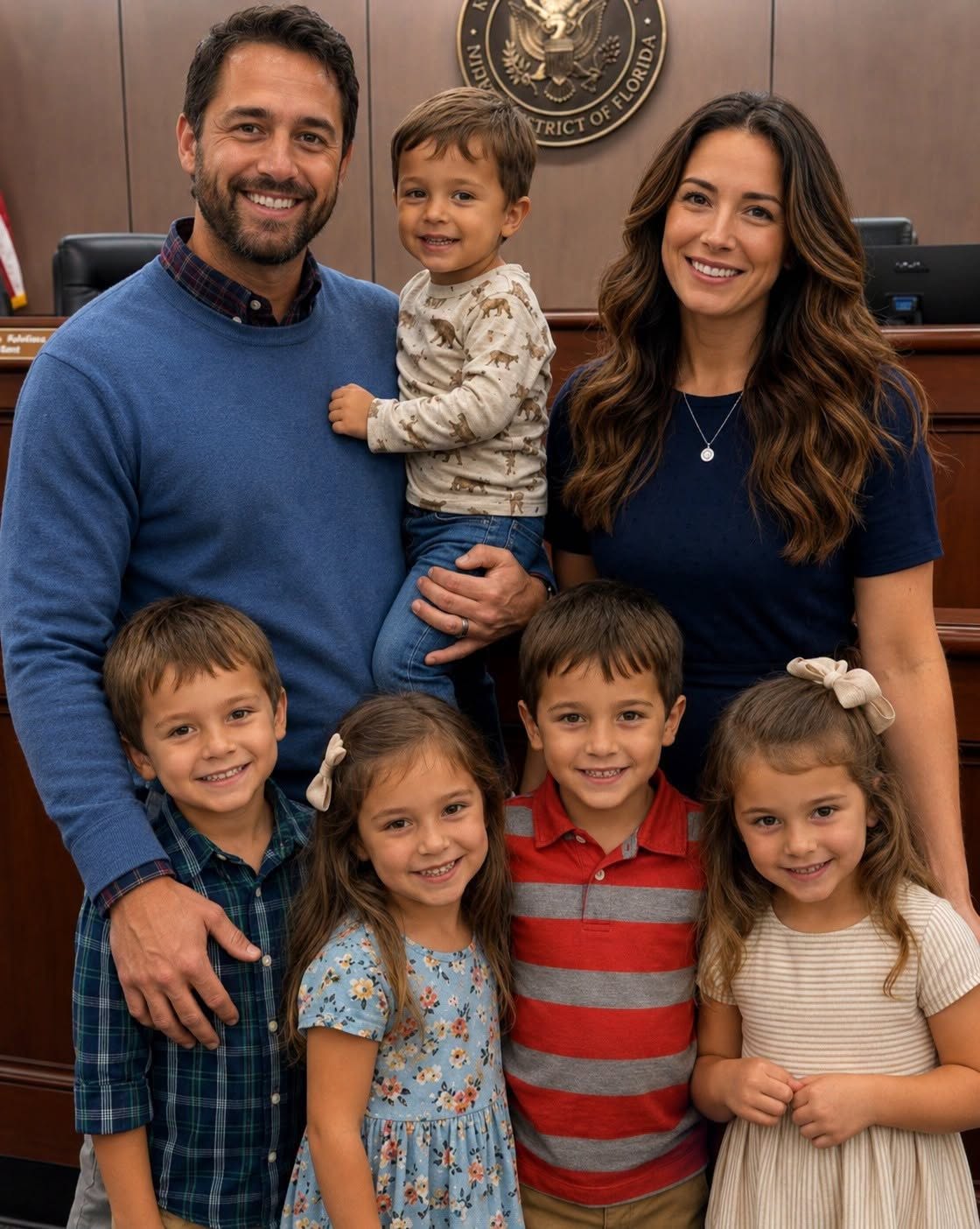
After a recess, Judge Marinescu issued her ruling. She did not grant me the adoption—it was impossible in a single hearing—but she suspended the separation of the siblings and ordered their temporary placement with me for sixty days, with weekly supervision by the Directorate, a psychological evaluation, and a complete review at the end of the period.
"This isn't a reward for their history," he warned. "It's a huge responsibility. He doesn't understand it yet, but he'll learn very quickly."
The first days at home
I learned that children aren't restored like furniture. Broken wood can be glued and polished; pain isn't. Mara hid bread under her pillow for fear of hunger. Darius wet the bed and covered his head, waiting for punishment. Ana couldn't stand being alone. Ilinca would only sleep if she felt a hand on her back. And Luca didn't play: he watched the door at night, fearing someone might come and take his brothers.
One night I found him sitting by the door at three in the morning. "I'm watching you," he said. I sat next to him until dawn. Trust didn't come through conversation, but when I bought bread before Mara finished hiding, when I washed the sheets without yelling, when I returned promptly from the garden to fetch Ana.
On day forty-three, Ilinca had a high fever, and we were about to lose everything. But that's another story. What I learned in that courtroom is simple: abandoned children experience promises differently. For them, "forever" is just a word adults say before they leave. My job, every day, is to prove them wrong.