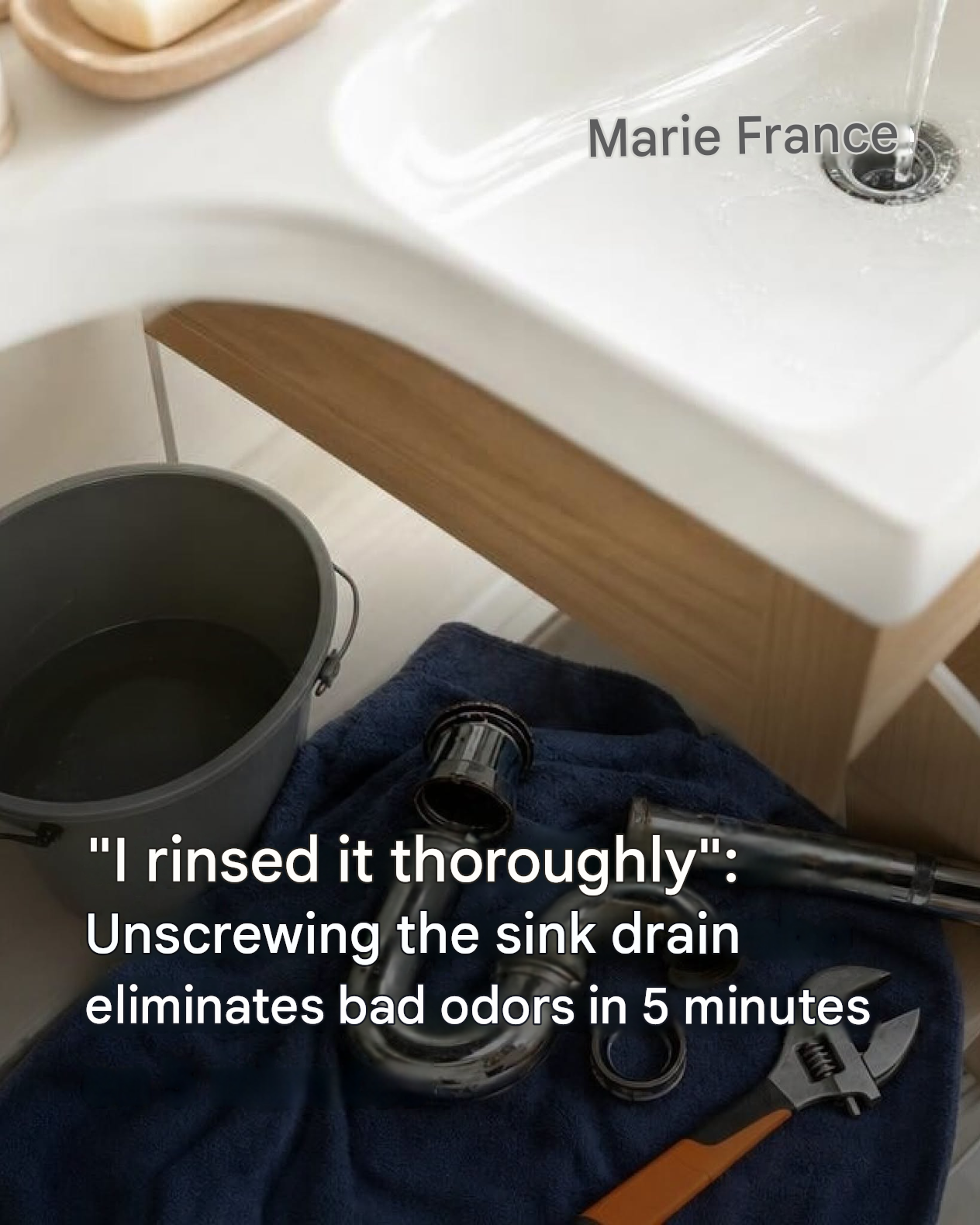

Every morning, the same scene is replayed in many rooms bath: a wipe with a sponge, a jet of hot water, the sink shines... but this little one sewer smell stay there, especially when you wake up. The sink seems clean, so where does this unpleasant, messy scent really come from the moment?
A reader also says: "I was rinsing my sink plenty of water every morning. The day I unscrewed the siphon below, I understood where the smell was coming from. What she discovered at the bottom of this plastic elbow changed everything. When the simple rinsing is no longer enough, it's under the sink that everything happens play.
Why rinsing the sink doesn't change the smell
The siphon is this little U-shaped tank or S placed under the sink. He constantly holds back a little water, called water guard, which forms a natural plug against gas rises. But this same elbow also holds back what leaves every day in the drain: hair, beard hair, residue soap and limescale deposits.
Over time, this mixture forms a dark paste which sticks to the walls. Bacteria grow there, ferment and generate real ones bad smells. Rinsing "with plenty of water" cleans it tank, not the inside of this elbow. The signs speak for themselves: smell tenacious at the level of the evacuation, small "poof" of smelly air when the water flows, gurgles, and sometimes a slow flow clearly.
The simple method: unscrew, empty, clean (without tools “pro”)
Good news: in most cases, manual cleaning fixes the problem in minutes. All it takes is a bucket about 5 liters, household gloves, cloth to protect the floor, of an old toothbrush, of bicarbonate of soda (approximately 50 g) and white vinegar (100ml). Place the bucket under the siphon, gently unscrew them rings, then the retained water is allowed to drain.
Next comes the less glamorous but decisive step: withdraw to the hand the clumps of hair and soap, brush the inside, then rinse with very hot water. The duo bicarbonate + vinegar poured into the siphon and into the pipe creates an effervescence that picks up the remaining deposits. After one last rinse, all that remains is to reassemble everything checking that the joint is clean, well positioned, and that the rings are tightened firmly, without forcing.
🔍 Why it works?
By unscrewing the siphon, we physically remove the hair, soap residue and limescale deposits that ferment and smell bad. Cleaning replace the water guard which blocks the gases, while the bicarbonate + vinegar mixture helps loosen dirt encrusted without damaging the pipes.
🚫 NEVER DO: reassemble the siphon with a dirty seal, poorly positioned, or just run very hot water in thinking that this will replace disassembly: the clusters remain stuck and the smells come back.
How often to do it (without y think)
To keep a bathroom sink healthy, clean it complete the siphon every two to three months is often sufficient. In a large family or with long hair, control monthly is more prudent. Between two disassemblies, leave regularly running hot water for a few moments helps limit deposits in the elbow.
If the smell returns very quickly despite everything, there are several avenues to check: a rarely used sink may have a siphon almost dry, just run a little water to recreate the anti-odor barrier. A cork further in the pipeline will instead require one suction cup or one ferret. In case of leak, wet paper tested under the siphon or as water rises, the advice of a plumber becomes essential avoid damage and infiltration.