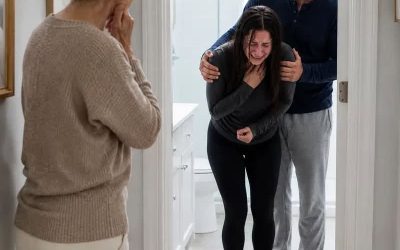
He held out a plain white envelope.
"Your husband asked me to give this to you today," she explained. "At his funeral. He told me I had to wait until this very day."
Before I could ask her name or how she knew Harold, she turned and hurried out of the church. My son gently touched my arm.
"Mom? Are you okay?"
"I'm fine... Really."
I put the envelope in my bag and said nothing else.
Later that night, after everyone had gone home and the house had fallen into the post-funeral silence, I finally opened it on the kitchen table. Inside was a letter written in Harold's familiar handwriting, and a small brass key jingled softly on the table as I turned the envelope over.
I explained the letter.
"My love," he began. "I should have told you this a long time ago, but I never found the courage. Sixty-five years ago, I thought I'd buried this secret forever, but it's followed me all my life. You deserve to know the truth. This key opens Garage 122 in the direction below. Go when you're ready. It's all there."
I read the letter twice. I told myself I wasn't ready, but I put on my coat, called a cab, and left. The garage was on the outskirts of town, behind a long row of metal doors that looked unchanged since the 1970s. I found number 122, inserted the key, and lifted the door. The smell hit me immediately: old paper and cedar trapped in a sealed space. In the center of the concrete floor was a huge wooden trunk covered in dust and cobwebs. I cleaned the lid and opened it.
Inside were children's drawings tied with faded ribbons, birthday cards addressed to Harold, school transcripts, and dozens of carefully preserved letters. Each ended with the same name: Virginia.
At the bottom of the trunk was a worn folder. Internal documents revealed that sixty-five years earlier, Harold had quietly cared for a young woman and her newborn daughter after the child's father disappeared. He paid the rent, covered her tuition, and sent monthly support for years. Every letter the woman wrote him had been carefully preserved.
For a moment, a terrible thought filled my mind. Harold had another family. I sat down on the cold garage floor and covered my mouth. "Oh, Harold," I whispered.
I heard the crunch of gravel outside. The funeral girl was at the entrance, carrying a bicycle.
"I was thinking of coming here," he said.
"Did you follow me?"
She nodded without embarrassment. "When Harold gave me the envelope, he said it was the most important thing I'd ever do in my life."
I looked at her carefully. "What's your name?"
"Gini".
"And your mother?"
"Virginia."
The name echoed in my chest. "Can you take me with her?"
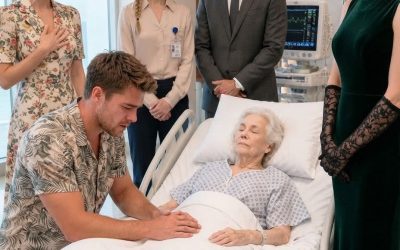
Gini hesitated before explaining that her mother was in the hospital and needed heart surgery they couldn't afford. We went together. Virginia lay pale in a hospital bed, tubes in her arm.
"Harold used to come to visit us sometimes," Gini said softly.
The doctor then told me the surgery was urgent but expensive. Standing in that corridor, I realized Harold knew exactly what I was about to discover.
Two days later, I returned with the money for the surgery. It was a success. When Virginia was strong enough to speak, she told me that Harold had saved her life and her mother's. Later, she showed me an old photo album. On one page was a picture of Harold as a young man, smiling.
"He was my father's best friend," Virginia explained. "My father died in an accident shortly before I was born. Harold promised him he'd take care of us. He never missed a payment, never forgot a birthday, but he always said his wife should never know. I was afraid you'd think I'd cheated on her."
I looked at my husband's photo. He hadn't been unfaithful; he'd been a man of his word, secretly carrying the burden of kindness for sixty-five years.
I contacted and got Virginia's.
"He didn't cheat on me," I said. "He didn't realize how much I loved the man I really was."
I spent the rest of my days getting to know Virginia and Gini. They were no longer a secret; they were family. And every time I saw Gini smile, I saw a little of the man who had kept his promise to the end.