Recipes

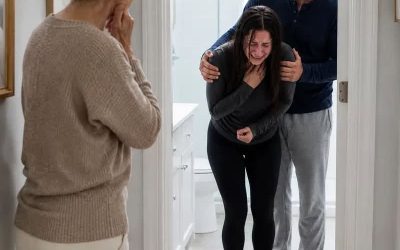
Her father married his daughter, blind from birth, to a beggar, and what happened next shocked many. Zainab had never seen the world, but she felt its cruelty with every breath. She was born blind into a family that valued beauty above all else. Her two sisters were admired for their beautiful eyes and graceful figures, while Zainab was treated like a burden: a shameful secret hidden behind closed doors. Her mother died when she was only five years old, and from then on, her father changed. He became bitter, resentful, and cruel, especially to her. He never called her by her name. He called her "that thing." He didn't want her at the family table, nor out when guests came. He believed she was cursed, and when she turned twenty-one, he made a decision that would destroy what little remained of his already broken heart. One morning, he entered her little room, where she sat silently, stroking the worn pages of a Braille book, and dropped a folded piece of cloth into her lap. "You're getting married tomorrow," he said flatly. She froze. The words made no sense. Married? To whom? "He's a beggar from the mosque," her father continued. "You're blind. He's poor. A perfect match." She felt the blood drain from her face. She wanted to scream, but no sound came out. She had no choice. Her father had never given her one. The next day, she was married in a hasty, modest ceremony. She never saw his face, of course, and no one described it to her. Her father pushed her toward the man and told her to take his arm. She obeyed like a ghost in her body. People chuckled. "The blind girl and the beggar." After the ceremony, her father handed her a small bag of clothes and pushed her back toward the man. "Now it's your problem," he said, walking away without looking back. The beggar, whose name was Yusha, led her silently down the road. He didn't speak for a long time. They reached a small, dilapidated hut on the outskirts of the village. It smelled of damp earth and smoke. "It's nothing special," Yusha said kindly. "But you'll be safe here." She sat on the old mat inside, barely holding back tears. This was her life now: a blind girl married to a beggar, living in a mud hut and clinging to a fragile hope. But that first night, something strange happened. Yusha prepared her tea with careful, gentle hands. He gave her his blanket and slept by the door, like a guard dog protecting his queen. He spoke to her as if he cared: he asked her what stories she liked, what dreams she had, what foods made her smile. No one had ever asked her those questions before. The days turned into weeks. Every morning, Yusha accompanied her to the river, describing the sun, the birds, the trees with such poetry that she began to feel she could see them through his words. He sang to her while he did the laundry and told her stories of stars and distant lands at night. She laughed for the first time in years. Her heart began to slowly open. And in that strange little hut, something unexpected happened: Zainab fell in love. One afternoon, as she reached out to take his hand, she asked softly, "Have you always been a beggar?" He hesitated. Then softly replied, "Not always." But he said nothing more. And she didn't press. Until one day she went to the market alone to buy vegetables. Yusha had given her precise instructions, and she memorized every step. But halfway there, someone grabbed her arm violently. "Blind mouse!" a voice spat. It was her sister, Aminah. "Are you still alive? Are you still playing the beggar's wife?" Zainab felt tears welling up in her eyes, but she remained upright. "I'm happy," she said. Aminah laughed cruelly. "You don't even know what this is. It's useless. Just like you." Then she whispered something that shocked her. "He's not a beggar, Zainab. They lied to you." Zainab staggered home, confused and shaken. She waited until nightfall, and when Yusha returned, she asked again, this time firmly. "Tell me the truth. Who are you really?" It was then that he knelt before her, took her hands, and said, "You should never have known. But I can't lie to you anymore." Her heart was pounding. What happens next will change everything. Like this comment and then check out the link.

The rain in the valley didn't fall; it hung there, like a cold, gray shroud clinging to the uneven stones…
August 4, 2026
Recipes

My parents gave my sister $80,000 to study in Paris and said I “didn’t deserve help”—Years later, my $5 million house and a public speech for a scholarship exposed the daughter they’d bet against… My mother told me I didn’t deserve help while a glass of champagne was still being raised in the air for my sister’s Parisian dream, which had been given to her for $80,000. For a second, no one moved. The crystal chandelier above the dining room table trembled with tiny golden glimmers. Dad’s associates stood still, with forced smiles plastered on their faces. Mrs. Whitaker next door stopped chewing. My sister Leah, radiant in a cream-colored silk dress, covered her mouth with both hands as if she’d just been crowned queen of the universe. Maybe she was. My parents had just announced they’d give her $80,000 to study art in Paris. Not a loan. Not a little help. A donation. My father stood at the head of the table in his navy blue suit buttoned to the hem and declared, “Talent deserves investment. Leah has a gift, and we believe Paris is the place where that gift will become something extraordinary.” Everyone applauded. Mom cried. Leah cried even harder. I sat at the end of the table, the place they always reserved for me because I was “quiet.” Daisy Coleman, the practical daughter. The quiet daughter. The one who never needed much. The one who could sit near the bathroom aisle and still say thank you. I waited for the applause to die down. I waited for Leah to hug Mom, hug Dad, kiss them both on the cheek, and accept the congratulations as if she’d already painted the ceiling of the Louvre. Then I put down my fork. The sound of metal touching porcelain echoed through the room. “And me?” I asked. I didn’t raise my voice. I’d never been loud in that house. Loudness was Leah's prerogative. Loud was her way of laughing, of crying, of dreaming, of disasters, of opening her exhibitions, of suffering for love, of painting unfinished canvases scattered across the porch as a testament to a genius. I was twenty-six, working full-time in software support, taking night classes in data analysis, and saving up for a certification that cost two thousand dollars. Two thousand dollars I was afraid to ask for because in my family, asking for something always meant getting a receipt. My mother didn't even look at me at first. She kept her eyes fixed on Leah, brushing a strand of blond hair out of her face as if Leah were still a child and not a twenty-eight-year-old with an engagement ring, designer shoes, and a life financed by everyone else's sacrifices. Then Mom smiled. Not kindly. Not cruelly. Worse. Naturally. "You don't deserve any help, Daisy." The words hit the table like a loaded gun. Dad closed his eyes for half a second. Not because she disagreed. Because Mom had said the part that needed to be kept secret, in public. Leah lowered her hands from her mouth. The tears stopped. Around the table, the guests stared at the wine glasses, the napkins, the plates, anything but my face. No one wanted to witness the exact moment a daughter realized her place. I looked at my mother's diamond ring. I looked at my father's gold watch. I looked at Leah's new bracelet, the one Mom had bought her "for courage" before Paris. Then I smiled. That scared them more than the tears would have. I took a sip of water slowly. The glass felt cool against my fingers, and I remember thinking how strange it was that my hands weren't shaking. My heart wasn't pounding. My throat wasn't closing up. Something inside me had simply gone silent. Completely silent. Dad cleared his throat. “Daisy, this isn’t the time.” “No,” I said, still smiling. “It really is the time.” My mother’s expression became serious. “Don’t make a scene.” It was the phrase my family always told me. Don’t make a scene. Don’t ruin Leah’s moment. Don’t be touchy. Don’t make comparisons. Don’t ask why your sister has a room overlooking the garden and you have one overlooking the street. Don’t ask why Leah’s report cards were framed while your science fair trophy ended up in a closet. Don’t ask why her crying was art and your tiredness was just an act. Don’t make a scene. So I didn’t yell. I didn’t throw the wine. I didn’t tell everyone at the party that when I had the flu in college, Mom told me to call a friend because Leah had an audition the next morning. I didn’t mention the birthday card with twenty dollars in it, while two weeks later they were throwing a rooftop party for Leah. I didn’t ask why Leah had a car and I had a bus pass. I just stood there. The chair legs rustled on the floor. I folded my napkin once, carefully, and placed it next to my plate. My steak was untouched. My wine was untouched. My old life was over. Mom was staring at me. “Sit down.” For the first time in my life, I heard that command and felt nothing. I looked from her, then at Dad, then at Leah. “Don't worry,” I said. “You'll never have to waste anything on me again.” Leah's mouth dropped open. “Daisy, come on. Don't be so dramatic.” That's when I finally looked at her. I really looked at her. Al si 👇 Read the full story below.

PART 2 I didn't leave my parents' house in a car because I didn't own one. By then Leah already…
August 4, 2026
Recipes

I walked into the ballroom at my father's hotel and heard my stepmother blurt out, "Security, take her out!" I left without a word, then quietly transferred the hotel, the land, and $24 million into my trust fund. A few minutes later, my phone blew up with 74 missed calls. At midnight, there was a persistent knock on my door. I entered the ballroom of the Halston Meridian Hotel five minutes after the donors' toast began, still wearing my navy blue business suit and the pearl earrings my mother had left me. Silence gradually fell in the room. First the waiters noticed me. Then the board members. Then my father, Richard Halston, standing next to the ice sculpture, a glass of champagne in his hand, a guilty expression already forming on his lips. Finally, my stepmother spotted me. Celeste Halston turned from the mayor's wife, whose silver dress gleamed under the chandeliers. Her smile froze, then deepened. "What are you doing here?" she said. I stopped just inside the ballroom door. Dad took a step forward. "Mara..." Celeste snapped her fingers toward the lobby. "Security, take her away." The sentence was harder than a slap. Two security guards looked at me, then at my father. Everyone was waiting for Richard Halston to correct her. He owned the hotel. He owned the event. He owned, at least publicly, the legacy my mother had built with him before she died. He did nothing. I looked at him for three seconds. That was all I gave him. Then I turned and left. No scene. No tears. No raised voices. In the lobby, under the brass clock my mother had chosen twenty-two years earlier, I picked up the phone and called my lawyer. “Elliot,” I said firmly. “Execute the transfer of trust tonight.” There was a pause. “Mara, are you sure?” I looked back toward the ballroom doors. Through the glass, I saw Celeste laughing again, already pretending I’d never existed. “Yes,” I said. “Move the hotel, the land, and the operating reserves.” “All twenty-four million?” “All of it.” My mother had been very careful. Before the cancer treatments failed, she’d rewritten everything. The hotel and the land beneath it had never been owned by my father, nor could they be sold, mortgaged, or given to Celeste’s son. She’d only managed them on paper. I’d been the legal beneficiary since my twenty-eighth birthday. It had been three weeks. I’d intended to let Dad continue to run the hotel. Then Celeste had security remove me from my mother’s ballroom, and Dad let her. At 9:14 p.m., Elliot texted me: Archived. Recorded. Confirmed. At 9:17 PM, my phone started vibrating. Dad. Celeste. Dad again. Unknown number. Dad. By 10:02 AM, I had seventy-four missed calls. At midnight, someone knocked on my apartment door so hard it rattled the chain. “Mara!” Celeste shouted from the hallway. “Open this door right now!” I stood there, barefoot, in the dark, watching the doorknob rattle. For the first time that night, I smiled. The rest of the story is below. 👇

I walked into the ballroom at my father's gala and heard my stepmother yell, "Security, take her away!" I walked…

August 4, 2026