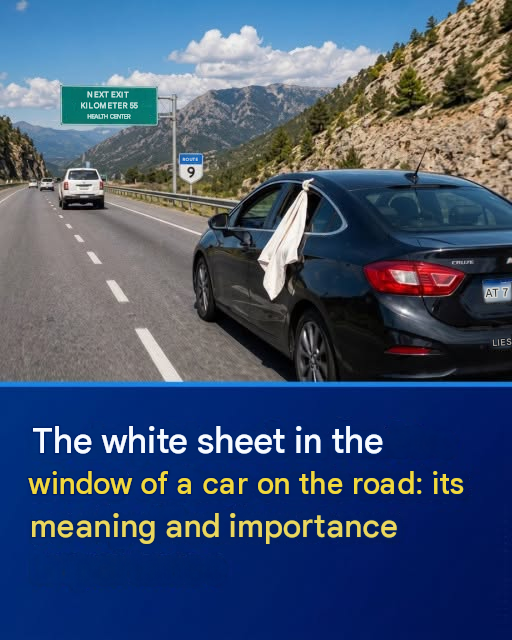
You are driving quietly on the highway and suddenly you see a car with a white fabric floating in its window. Weird? Maybe. But this seemingly innocuous gesture actually hides a very specific message. An informal code, born out of necessity, that thousands of motorists use without anyone having ever officially taught it. What if understanding this signal could one day make a real difference?
An improvised gesture, but full of meaning
This white cloth does not appear in any highway code. No manual, no law mentions it. And yet, it exists, alive and well, transmitted from driver to driver as a secret of good conduct.
Why white? Not by chance. This color universally evokes peace, truce, and above all... a request for help. When it floats from a window, the message is clear: something is wrong with this vehicle.
Situations where this signal appears
Several circumstances can push a motorist to improvise this signal:
– A mechanical breakdown : the car is immobilized on the side of the road and the driver tries to signal its presence to avoid an accident. – A medical emergency : someone on board requires prompt care and the driver wants to warn other vehicles. – A convoy ride : during processions or group trips, this fabric allows you to identify cars that are part of the same group. – A gas shortage : the vehicle is simply stationary due to lack of fuel.
In each of these cases, the gesture reflects the same reality: we need attention, even help.
Does this give priority to passage?
Here, let's be very clear: no. A white cloth has no legal value. Only official emergency vehicles —ambulances, firefighters, police — benefit from priority passage, and only when their sirens and flashing lights are activated.
A private car with a white fabric cannot therefore run a red light, exceed speed limits or impose itself in a reserved lane. Even if the situation on board is stressful, the highway code applies to everyone, without exception.
How to react if you cross this signal?
Don't panic, but don't be indifferent either. Here are the good reflexes to adopt:
– Slow down gradually, without braking suddenly so as not to surprise the drivers behind you. – Give way only if it is secure and don't let that force you to break a rule. – If the vehicle is stationary, assess whether you can stop safely, with the markings on, to offer assistance. – Call for help — the 15th, 17th or 18th — if the situation seems serious to you. This is often the best help you can give. – Keep calm faced with a driver who seems agitated or unpredictable.
Solidarity on the road, yes — but with caution
Helping someone in difficulty is a beautiful human reflex. But this solidarity must never endanger your safety or that of other users. Calling for help often remains the most useful and safest action.
This informal signal persists because it fills a void: warnings signal a stop, but do not say why. In this lack, drivers have created their own language.
Knowing this code means riding with a little more empathy— and sometimes that changes everything.