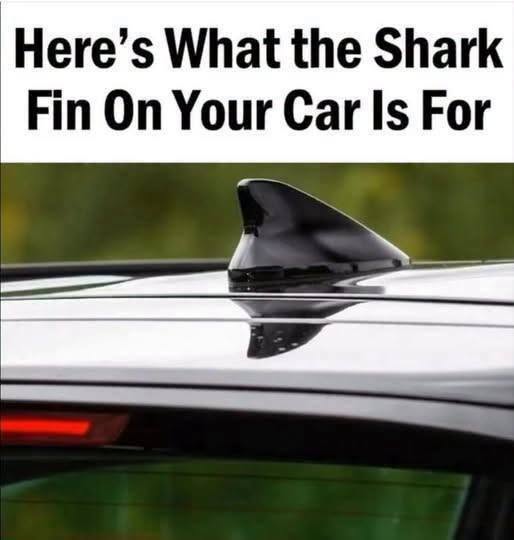
Take a look at the roof of almost any modern vehicle and you'll notice a small, sleek, shark-fin-shaped accessory. Most drivers assume it's just a stylish design element, but it's actually one of the most important communication components on the entire vehicle.
Hidden inside that compact housing is technology that helps your car stay connected to satellites, radio stations, navigation systems, and even emergency services.
More Than Just a Radio Antenna
Years ago, vehicles relied on long metal whip antennas that were designed mainly to receive AM and FM radio signals. While effective, they were easily bent, damaged, and created extra wind resistance.
Today's shark-fin antenna is smaller, stronger, and far more advanced.
Depending on the vehicle, it may support:
- AM/FM radio reception
- GPS navigation
- Satellite radio
- Cellular communication
- Wi-Fi connectivity
- Bluetooth systems
- Emergency communication services
- Connected vehicle features
Instead of multiple external antennas, manufacturers combine several systems into one aerodynamic housing.
Why Every Shark Fin Isn't the Same
Not all shark-fin antennas contain the same technology.
The features depend on the vehicle's:
- Make and model
- Year of manufacture
- Trim level
- Optional equipment package
Some cars use the shark fin only for GPS and satellite radio, while others also include cellular antennas and internet connectivity. Certain vehicles even use antennas embedded in the rear window for regular radio reception.
Signs Your Shark-Fin Antenna May Be Damaged
Although built to withstand weather and daily driving, the antenna can still be damaged by:
- Low garage ceilings
- Falling branches
- Roof cargo
- Automatic car washes
- Accidental impacts
Even if the plastic cover looks fine, internal electronics or wiring may have been affected.
Common warning signs include:
- Weak radio reception
- GPS losing its location
- Satellite radio cutting out
- Connected services no longer working
- Water stains inside the headliner
- Wind noise around the antenna
- Visible cracks or loose mounting
Keep It Protected
To extend its lifespan:
- Avoid using it as a handle when cleaning your car.
- Keep pressure washers away from the antenna's base.
- Make sure roof racks and cargo don't strike it.
- Inspect the rubber seal occasionally for cracks or leaks.
A damaged seal can allow water to enter the roof, leading to expensive repairs.