Wrist width does not determine your correct weight
An old piece of advice is to measure your wrist to determine whether you have a small, medium or large build. Wrist size can tell you something about your skeletal proportions, but it cannot determine an exact healthy weight.
It does not take sufficient account of:
- Muscle mass
- Fat distribution
- Genetics
- Pregnancy and the period after pregnancy
- Hormonal changes
- Drug
- Diseases
- Fluid retention
- Training level
Wrist width should therefore not be used to determine how many kilograms a person "should" weigh.
Should weight decrease with age?
No, there is no general rule that women must weigh less as they get older. Urging older people to continue losing weight simply because of age can be misleading.
Over the years, muscle mass can decrease if the body does not receive sufficient load, energy and protein. Therefore, it is often more important to maintain strength, balance and functional ability than to chase an ever-lower number on the scale.
Regular strength training, daily exercise, adequate nutrition and recovery can help preserve muscle. Rapid or involuntary weight loss in an older person should be taken seriously and assessed by healthcare professionals.
What says more about health than an individual's weight?
A broader assessment may include:
How weight changes over time
A stable weight where you feel good and function in everyday life may be more relevant than a number from a general table.
However, rapid or involuntary weight gain or loss may need to be investigated.
Muscle strength and physical function
Being able to walk, carry, stand, work and participate in everyday life says a lot about the function of the body. Muscle strength is especially important as you get older.
Blood pressure and blood tests
Blood pressure, blood sugar and blood lipids can provide important information that is not visible on the scale.
Sleep and energy
Good sleep, recovery and consistent energy during the day are important parts of health.
Eating habits and the relationship with food
Regular meals and a varied diet are more important than following strict diets. Food should provide energy and nourishment, not become a constant source of guilt or worry.
Mental well-being
Thoughts about weight and appearance should not take over everyday life. If weighing or eating causes you great anxiety, it is wise to talk to a trusted adult or healthcare provider.
Waist measurement can provide additional information
Healthcare providers may sometimes use waist circumference along with BMI and other health markers. Fat that accumulates around the stomach may be linked to different risks than fat that accumulates on, for example, the hips and thighs.
However, waist measurement is still only a screening tool. It should not be used to criticize the body or create a new measurement to check every day. 1177 recommends that weight, BMI and waist measurement be assessed together with the rest of your health.
A better focus than “ideal weight”
Instead of trying to reach an exact number, it may be more helpful to focus on habits that support the body:
- Eat regularly and variedly
- Move in a way that feels possible and sustainable
- Train strength based on your conditions
- Prioritize sleep and recovery
- Avoid extreme diets
- Seek help for recurring pain, fatigue or stomach problems
- Follow medical advice if you have a condition that affects weight.
Healthy habits don't have to produce a dramatic change on the scale to be valuable.
Important for children and teenagers
The BMI limits for adults should not be used for children and adolescents. The body changes during growth, and the assessment needs to be adapted to age and development. For children and adolescents, special growth curves and isoBMI are used.
A young person should therefore not try to reach the adult weight range on their own. Questions about growth, weight or food should be raised with the school nurse, health centre or another safe healthcare contact.
When should you contact healthcare?
Contact healthcare if you:
- Gaining or losing a lot of weight without a clear explanation
- Have constant fatigue, dizziness, or weakness
- Have changed periods or missed periods
- Experiencing swelling or rapid fluid gain
- Have strong concerns about food, weight, or exercise
- Avoids many foods for fear of weight gain
- Have recurring binge eating or feel like you are losing control
- Have a weight change after starting a medication
- Want a personal assessment of your health?
If necessary, a health center can assess weight development along with blood pressure, symptoms, lifestyle habits and relevant tests.
Common misconceptions
“All women who are 170 cm tall should weigh the same amount”
No. People have different muscle mass, skeleton, body composition, and medical conditions.
“The lowest weight within the range is best”
No. A lower number is not automatically healthier. The weight at which the body functions, receives enough nutrition, and can maintain strength is more relevant.
“A thin person is always healthy”
No. Health cannot be judged by appearance. Even people with low weight can have nutritional deficiencies, low muscle mass, or disease.
“You have to weigh less as you get older”
No. Maintaining muscle, strength, and functional ability is often more important than losing weight.
“BMI shows how much body fat you have”
No. BMI does not distinguish between fat, muscle and bone, nor does it show the location of fat.
Brief conclusion
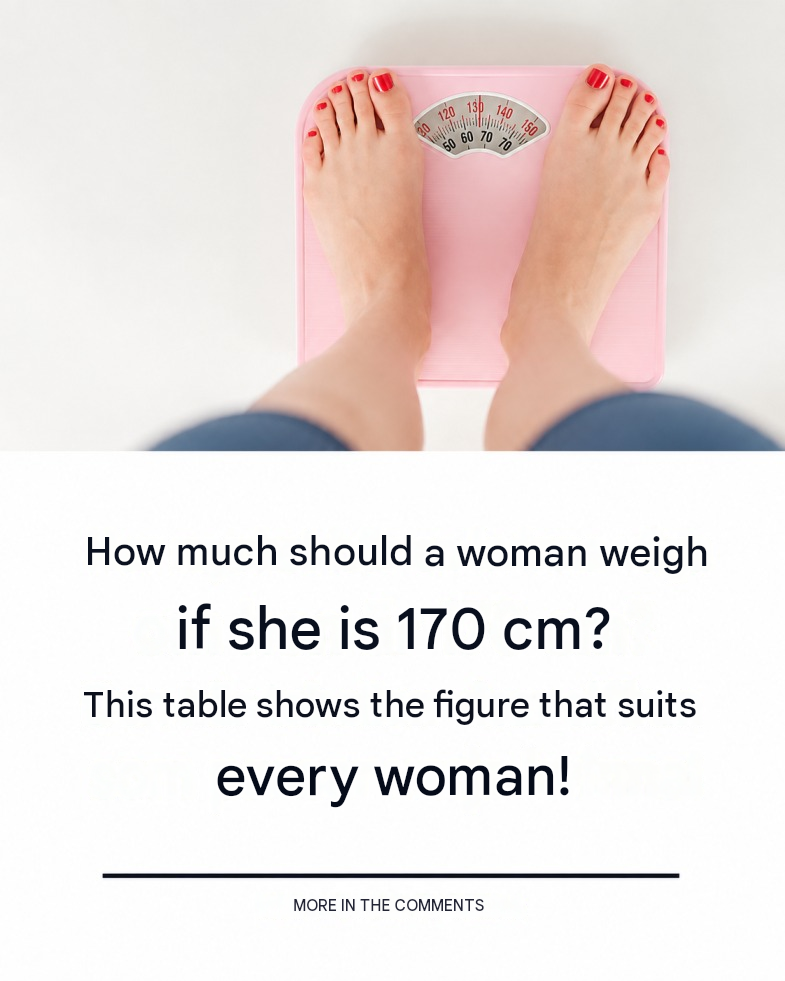
For an adult woman who is 170 centimeters tall, the usual BMI reference range corresponds to approximately 54–72 kilograms. However, it is not a personal ideal weight and should not be used as a requirement.
A healthy assessment takes into account much more than the scale: strength, blood pressure, blood values, weight development, sleep, eating habits, symptoms and mental well-being. The right goal is not necessarily a certain number of kilograms, but a body that receives sufficient nutrition and functions well in everyday life.
FAQ
What is a normal weight for an adult woman who is 170 cm?
The usual BMI reference range is approximately 54–72 kilograms. It is a statistical range and not an individual target.
Is 70 kg a lot if you are 170 cm tall?
No, not automatically. At 170 centimeters, 70 kilograms corresponds to a BMI of approximately 24.2. Health still needs to be assessed more broadly than through BMI.
Can a fit woman weigh more than the range and still feel good?
Yes. Muscle contributes to body weight, and BMI cannot distinguish muscle mass from fat mass.
Should a woman weigh less after 50?
There is no general rule about it. Maintaining muscle, strength and adequate nutritional intake becomes especially important as you age.
Can wrist size indicate ideal weight?
No. The wrist measurement cannot determine an accurate or medically correct weight.
Is BMI reliable?
BMI is a simple screening tool but not a complete health assessment. It must be interpreted in conjunction with other information.
Does the range also apply to teenagers?
No. Children and adolescents should be assessed using age-appropriate growth curves and isoBMI, not the adult BMI table.
When is a change in weight a cause for concern?
Rapid, involuntary or unexplained changes should be discussed with healthcare professionals, especially if combined with fatigue, pain, menstrual changes or other symptoms.