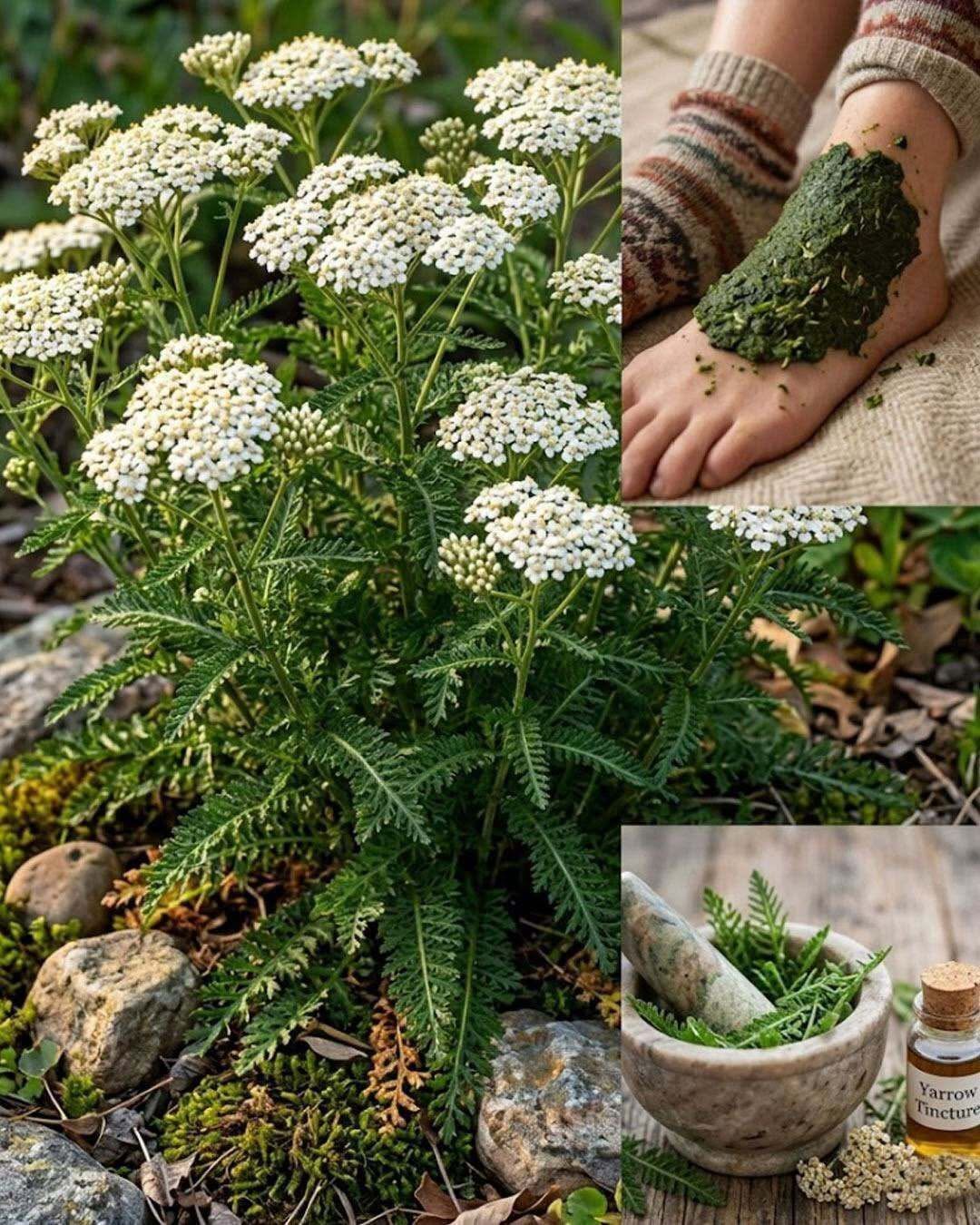
Yarrow is one of those plants that many people pass by without noticing. It grows in meadows, lawns, roadsides and dry lands and is recognizable by its small, bright flower clusters and finely lobed, almost feather-like leaves.
The plant has a long history in European herbal tradition. It has been used for mild digestive problems, minor menstrual cramps, and superficial skin care, among other things. However, this does not mean that yarrow is a panacea or that it can treat infertility, varicose veins, infections, or hormonal problems.
The European Medicines Agency classifies its use for mild stomach upset, temporary loss of appetite, minor menstrual cramps and small superficial wounds as traditional. This means that its use is based on long experience, but that there are still insufficient clinical studies to establish its effectiveness with high certainty.
How to recognize yarrow
Yarrow, Achillea millefolium , is a perennial plant that typically blooms from early summer to early fall.
Typical characteristics are:
- finely lobed, soft and aromatic leaves
- upright stem
- flat collections of many small flowers
- usually white or pale pink flowers
- a distinct herbal scent when the leaf is rubbed
The plant belongs to the Asteraceae family, the same plant family as chamomile, daisies and marigolds.
It is important to identify wild plants with complete certainty. Never pick a plant for internal use if you have only compared it to a picture on the internet.
When can yarrow be harvested?
The flowering above-ground parts are usually collected when the plant is in bloom. The exact period varies depending on the climate and location, but harvesting is often from June to September.
Choose a dry day after the dew has disappeared. Harvest only healthy plants that are free from mold, insect infestation, and discoloration.
Avoid picking near:
- busy roads
- industrial land
- sprayed crops
- dog rest areas
- ditches with polluted water
- areas where you do not have permission to pick
Don't take all the flowers from the same area. Leave enough for pollinating insects and for the plant to reproduce.
How to dry yarrow
Drying is an easy way to take care of a small amount of yarrow.
Do this:
- Check the plant parts and remove damaged leaves and flowers.
- Gently shake off small insects.
- Place the plant parts sparsely on a clean net, paper or drying frame.
- Place them in a dry, shady and well-ventilated place.
- Turn the material over from time to time.
- Let it dry until the stems and leaves feel completely dry.
- Store the dried herb in a clean, dark jar.
Direct sunlight can fade the herb and affect the scent. Never package it while it still feels damp, as residual moisture can lead to mold.
Throw away the herb if it smells musty, has visible mold, or has changed in a suspicious way.
What does the current state of knowledge say about yarrow?
Yarrow contains several plant compounds, including essential oils, bitters, flavonoids, and tannins. Laboratory studies have shown properties that have sparked interest, but results from test tubes or a laboratory setting cannot automatically translate into a safe treatment in humans.
The uses described by European authorities mainly concern standardized herbal products and traditional use in:
- mild bloating and gas
- minor, crampy stomach discomfort
- temporary loss of appetite
- mild menstrual cramps
- small superficial wounds
There is insufficient support for claims that yarrow can cure infertility, regulate all menstrual problems, treat varicose veins, or replace medical care for infections.
Yarrow and menstrual disorders
Yarrow is traditionally used in herbal products for minor menstrual cramps. The European Medicines Agency stresses that this is based on long-term use and not on strong clinical evidence.
Menstrual cramps that are severe, recur regularly, or affect everyday life should not be treated with home remedies alone. Such complaints can sometimes be due to, for example, endometriosis, cysts, or other conditions that need to be assessed by healthcare professionals.
Seek care at:
- sudden very severe pain
- unusually heavy bleeding
- bleeding between periods
- fainting or severe dizziness
- fever along with abdominal pain
- pain that worsens over time
-