This kind of everyday strength is often more meaningful than gym performance.
4. Maintaining Balance While Standing on One Leg
Balance tends to decline with age, but it can be preserved with practice. If you can stand on one leg for several seconds without support, it’s a strong indicator of stability and neuromuscular control.
In Gerontology, balance is considered a key predictor of fall risk—so maintaining it is a major advantage.
5. Managing Daily Tasks Independently
Cooking, cleaning, dressing, and organizing your day may seem routine—but they require a combination of physical ability, memory, and problem-solving.
Being able to handle these tasks on your own reflects both physical health and cognitive resilience.
Strength Looks Different With Age
As the body changes, so does the definition of strength. It becomes less about performance and more about function—what you can do, how confidently you can do it, and how consistently you maintain it.
In fields like Kinesiology, experts emphasize “functional fitness”—the ability to perform real-world activities safely and efficiently.
Final Thoughts
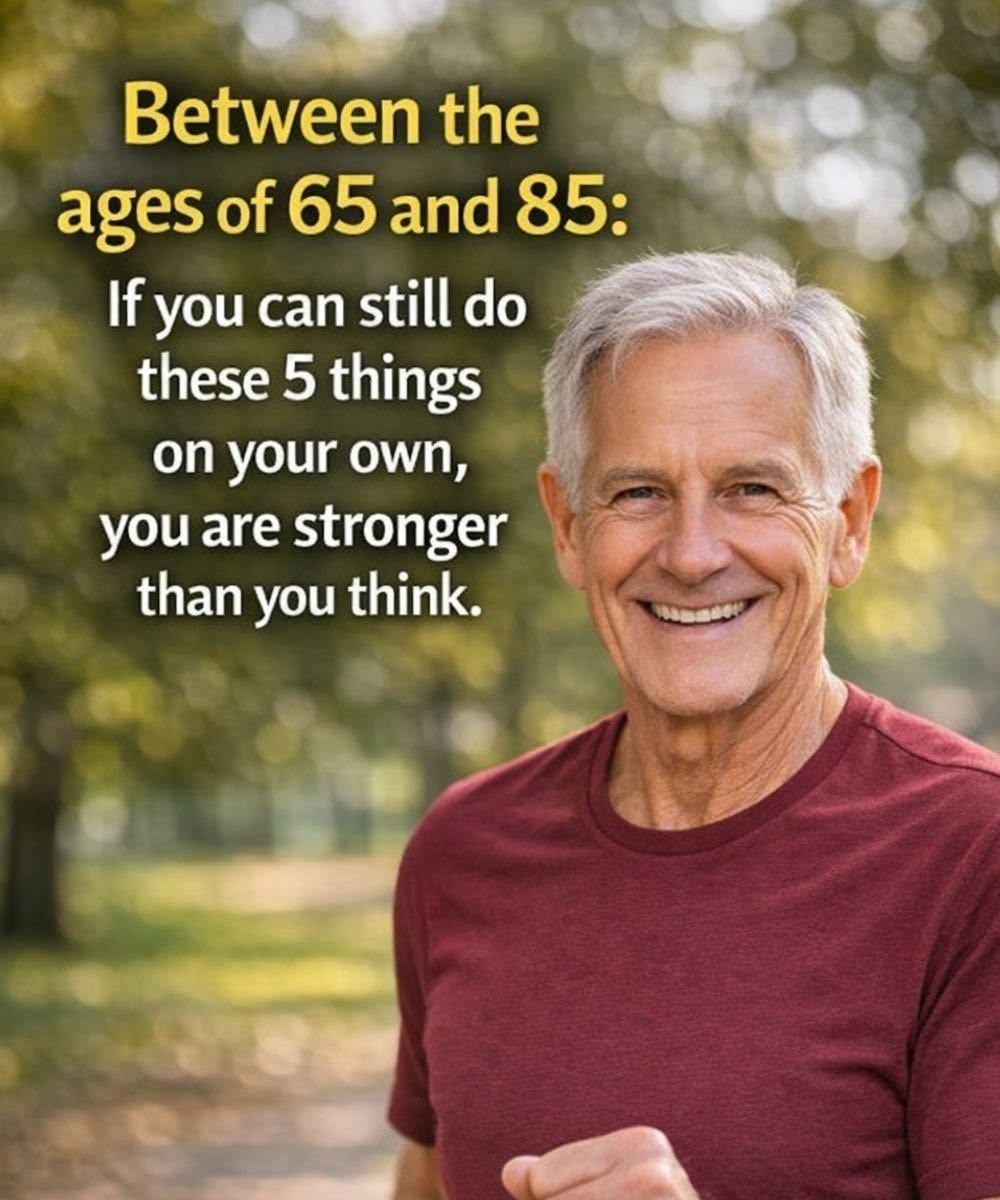
If you can still do these five things, you’re not just “getting by”—you’re maintaining a level of independence that many people strive for.
Strength in later life isn’t always visible, but it shows up in everyday moments:
Standing up with ease
Walking with purpose
Taking care of yourself without help
And perhaps most importantly, it reflects a body and mind that are still working together—supporting you in living life on your own terms.
So if you recognize yourself in these abilities, take a moment to appreciate it.
Because you’re stronger than you think.