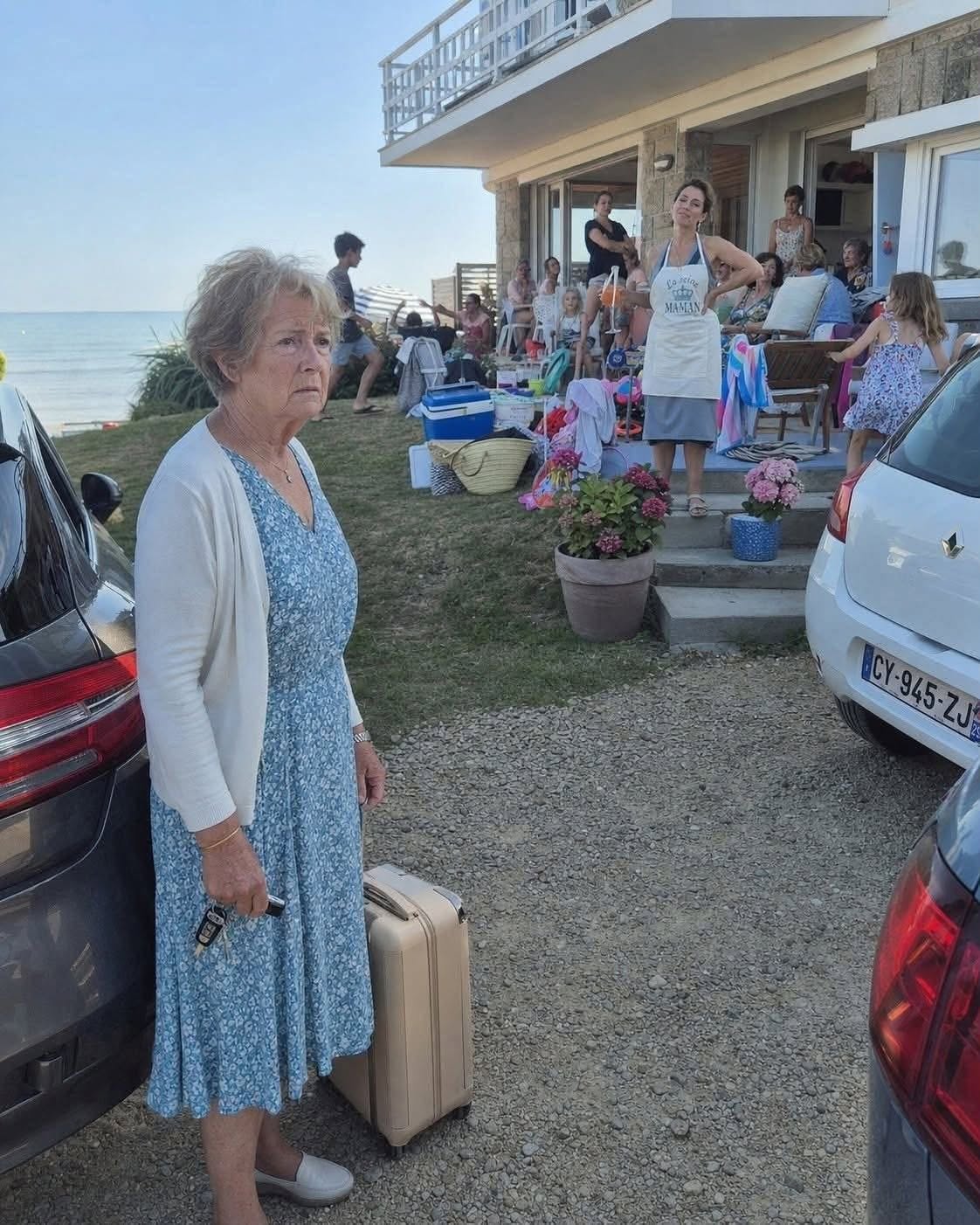
You understood perfectly.
This is what you say to Megan, your heart pounding so hard your vision blurs. At seventy, you've learned that humiliation stings, but power is cold. So you tighten your grip on the handle of your suitcase, ignore the teenager who suggested a hotel as if you were a lonely stranger who'd taken a wrong turn, and give your daughter-in-law that small, courteous smile that once helped you survive thirty-eight years of clients who expected miracles to be over by Thursday.
“Sure,” you say. “You’re all having fun.”
Megan's smile widens triumphantly.
She thinks she's won because she confuses kindness with surrender. Many people have made this mistake with you over the years. They hear a kind voice, see comfortable shoes, neatly styled silver hair, and decide they're dealing with a harmless old lady. They never see the steely mettle that lies beneath until their plans begin to crumble, stitch by stitch.
Advertisements
You turn and walk down the porch steps with your head held high.
Behind you, the music starts again. Someone laughs. A child screams with joy when a soccer ball hits your pots again. The salty air, usually your medicine, has a bitter taste in your mouth. When you finally reach the car, your hands are shaking so badly that you have to sit behind the wheel for a full minute before you feel confident enough to turn the key.
You're not crying.
Not yet. Crying is for private rooms and for genuine pain. What's pressing against your ribs now is older and sharper than tears. It's the memory of all the times you allowed someone to think that because you didn't scream, you had no limits. It's the echo of your late husband, Daniel, who always said that the worst thing about rude people isn't their cruelty, but their confidence. Megan didn't simply take over your beach house. She did it with the relaxed confidence of someone who thought you had no meaningful answers to give.
It is precisely this certainty that offends you the most.
As you pull away from the curb, take a quick glance in the rearview mirror.
The beach house remained where it always was, with its white tiles and blue shutters, the wraparound veranda overlooking the Atlantic like an old friend. Daniel built the front pergola himself one spring, when Robert was twelve and obsessed with helping out, which meant hammering screws into the sand and wondering if hammers could break concrete. You painted the kitchen yellow the year after Daniel died, because grief had darkened the rooms and you needed proof that color could still exist. Every plank in that house carries a version of your life. Megan doesn't curl up among wood and plaster. She curls up among memories.
Drive directly to the little inn two miles away and book the last available room for the weekend.
The owner, Mrs. Porter, recognizes you immediately. “Eleanor,” she says with cheerful surprise, then pauses for a moment when she sees your face. “Are you okay?”
You'd almost say yes.
Then something inside you refuses to give in to that old instinct. You're tired of shielding others from the truth about what they've done. So you put your bag on the counter and say, very calmly, "My daughter-in-law is having guests at my house and has informed me there's no room for me."
Mrs. Porter blinks. “Your house?”
“My house.”