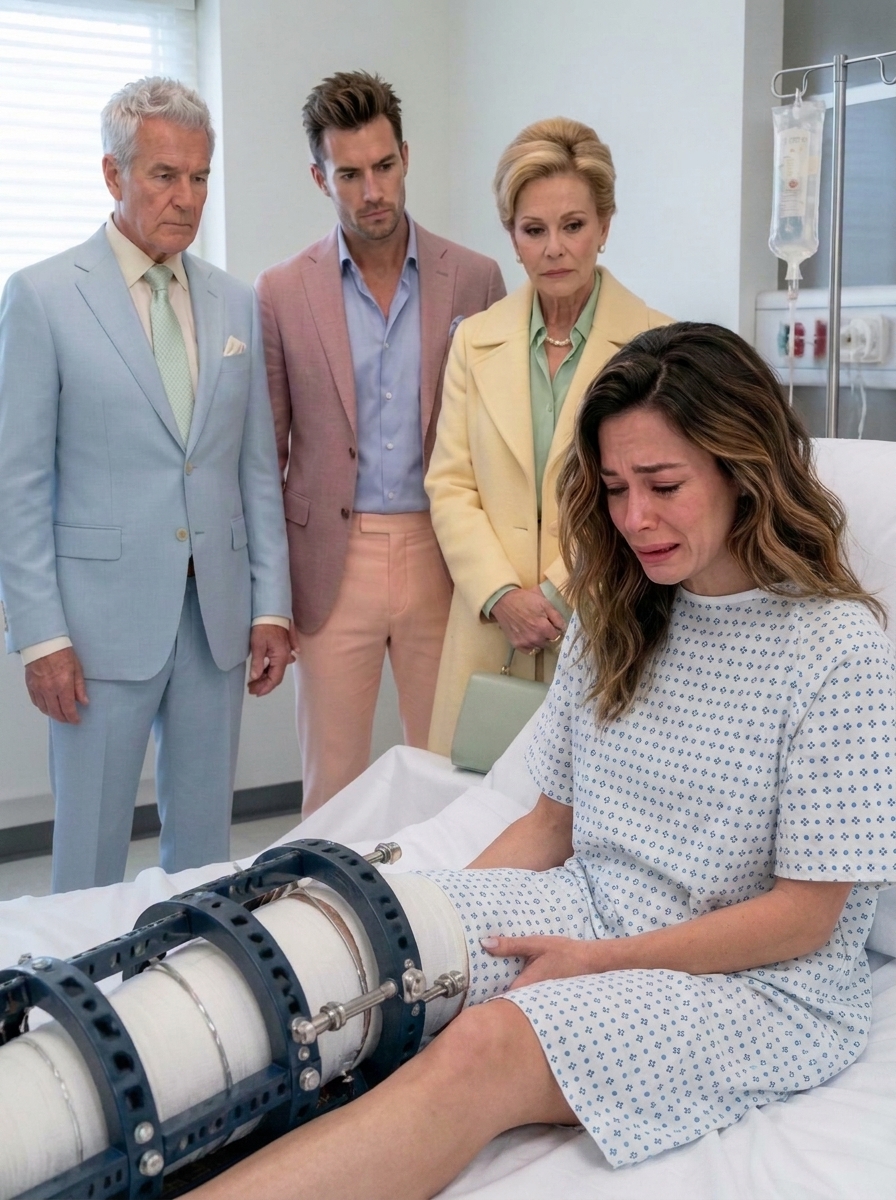
That afternoon, detectives searched the house under a court order.
Mrs Gable showed them the back patio and the laundry room door I had escaped through.
Inside the kitchen, forensic officers recovered the rolling pin. In Mason’s closet, they found my passport, identification cards, credit cards and a binder containing years of stolen financial records.
They also seized his computers.
When Mason and his parents returned home, officers were photographing the kitchen and placing evidence into numbered bags.
My father stood nearby with Victoria, packing my clothes and documents.
“What are you doing in my house?” Mason shouted.
“Protecting your wife,” a detective replied. “And securing a crime scene.”
That night, Mason called from an unknown number.
First, he cried.
He promised that nobody would hurt me again.
Then he offered money.
When I told him the divorce papers had already been prepared, his voice changed.
“Without me, you’re nobody.”
“Without you,” I replied, “I’m finally myself again.”
Victoria recorded the entire conversation.
The next morning, Beatrice appeared in the hospital lobby with two relatives. She threw herself onto the floor and claimed corrupt doctors were holding me hostage.
Then she shouted, “A wife gets corrected inside her own home!”
A visitor recorded the scene.
Within hours, the video spread across local social-media pages.
I never posted it. Beatrice had exposed herself.
Mason’s employer soon became involved.
A senior executive named Arthur Sterling visited me and suggested that a private settlement might protect everyone’s reputation.
“My injury is not a public-relations problem,” I told him. “It is evidence of a crime.”
Victoria then showed him financial records proving that Mason had been routing company payments into a shell business.
Some of that money had reached the same account holding my stolen salary.
Sterling left immediately.
Two days later, Mason was suspended.
The company’s internal audit uncovered forged electronic signatures, fake vendors and unauthorised transactions made using my identity.
Richard visited the hospital alone.
He said Beatrice had been wrong, but insisted Mason could lose everything.
“We’re family,” he reminded me.
“You watched me lying on the floor and went into the next room to eat dinner,” I said.
He lowered his eyes.
“I didn’t know how to stop them.”
“You chose not to.”
Then he asked how much money I wanted.
“I want my stolen wages, my medical expenses and every asset legally owed to me,” I replied. “But you cannot purchase my silence.”
He accused me of becoming cruel.
“No,” I said. “I’ve become free.”
The prosecution gathered hospital records, neighbour testimony, recorded calls, security footage and the evidence taken from the house.
Investigators also found old messages in which Mason had written that he needed to break my spirit so I would abandon the idea of divorce.
The violence had not been accidental.
It had been planned.
Still, the family tried to frighten me into dropping the case.
Beatrice called from unknown numbers. Mason threatened my parents.
The authorities placed them under temporary protection, while I was transferred to a rehabilitation facility using another name.
There, I began the painful process of learning to walk again.
Every step felt impossible.
But each day, I moved a little farther.
Part 3: The Mistake That Destroyed His Defence
One stormy evening, the hallway lights flickered.
My door opened.
Mason stepped inside wearing a stolen staff badge and holding a legal statement he wanted me to sign.
The document claimed I had lied about everything.
“You’re ending this tonight,” he said.
For one terrifying moment, I felt as powerless as I had on the kitchen floor.
Then I saw the emergency button beside my bed.
When Mason moved toward me, I blocked him with my crutch and pressed the alarm.
Nurse Mendez and a security guard rushed into the room and restrained him until police arrived.
The room’s camera had captured the entire incident.
As officers led him away, Mason shouted, “Look what you made me do!”
“Nobody made you do anything,” I replied.
That final attack destroyed his remaining defence.
Prosecutors added charges for witness intimidation, identity fraud, financial crimes and attempted murder.
Beatrice was charged for the original assault. Richard accepted a plea agreement and agreed to testify against both his wife and son.
During the trial, Beatrice’s lawyers insisted the situation had been exaggerated.
Medical experts explained that my injuries could not have resulted from an ordinary fall.
Mrs Gable described finding me outside her home in the rain.
Nurse Mendez presented the recordings.
Then the jury watched the video of Mason entering my rehabilitation room.
For once, Beatrice had nothing to say.
The defence tried to portray me as unstable, but a court psychologist found that although I suffered from severe trauma, my account was consistent and credible.
One of Beatrice’s relatives eventually admitted that she had been asked to lie.
Their story collapsed completely.
Outside the courthouse, several women held signs supporting survivors of domestic abuse.
One woman took my hand and told me that seeing the hospital video had encouraged her to report her own husband.
That was when I realised my decision to speak had not only freed me.
It had helped someone else open her own locked door.
Mason was later convicted and sentenced to eighteen years in prison.
Beatrice received eight years.
Richard avoided prison because of his cooperation, but the family’s assets were sold to cover restitution, medical expenses and my divorce settlement.
I recovered my stolen income and legal identity.
I could not reclaim the pregnancy I had lost, the years of fear or the full strength in my leg. My doctors warned that I might always need a cane.
But six months later, I walked out of rehabilitation on my own.
My parents waited in the lobby.
My father apologised for not realising what had been happening.
“You did not lock me inside that house,” I told him. “What matters is that when I finally called, you came.”
A year later, I opened a financial consulting firm in San Antonio.
One day each week, I helped women escaping controlling relationships recover documents, separate bank accounts and rebuild their independence.
Then one morning, Richard called.
“You destroyed our family,” he cried. “Beatrice is in prison. Mason has lost his future. We have nothing left.”
I looked through my office window at the morning sunlight.
“I did not destroy you,” I said. “You destroyed yourselves every time you chose cruelty, lies and silence.”
“Don’t you have any compassion?”
I remembered the kitchen floor and the sound of them laughing in the next room.
“I have compassion for the woman I used to be,” I answered. “That is why I will never allow anyone to imprison her again.”
I ended the call and walked outside, slowly but steadily, supported by my cane.
Justice could not erase everything they had done.
But it gave me back the one thing they had tried hardest to take:
The certainty that my life belonged to me.