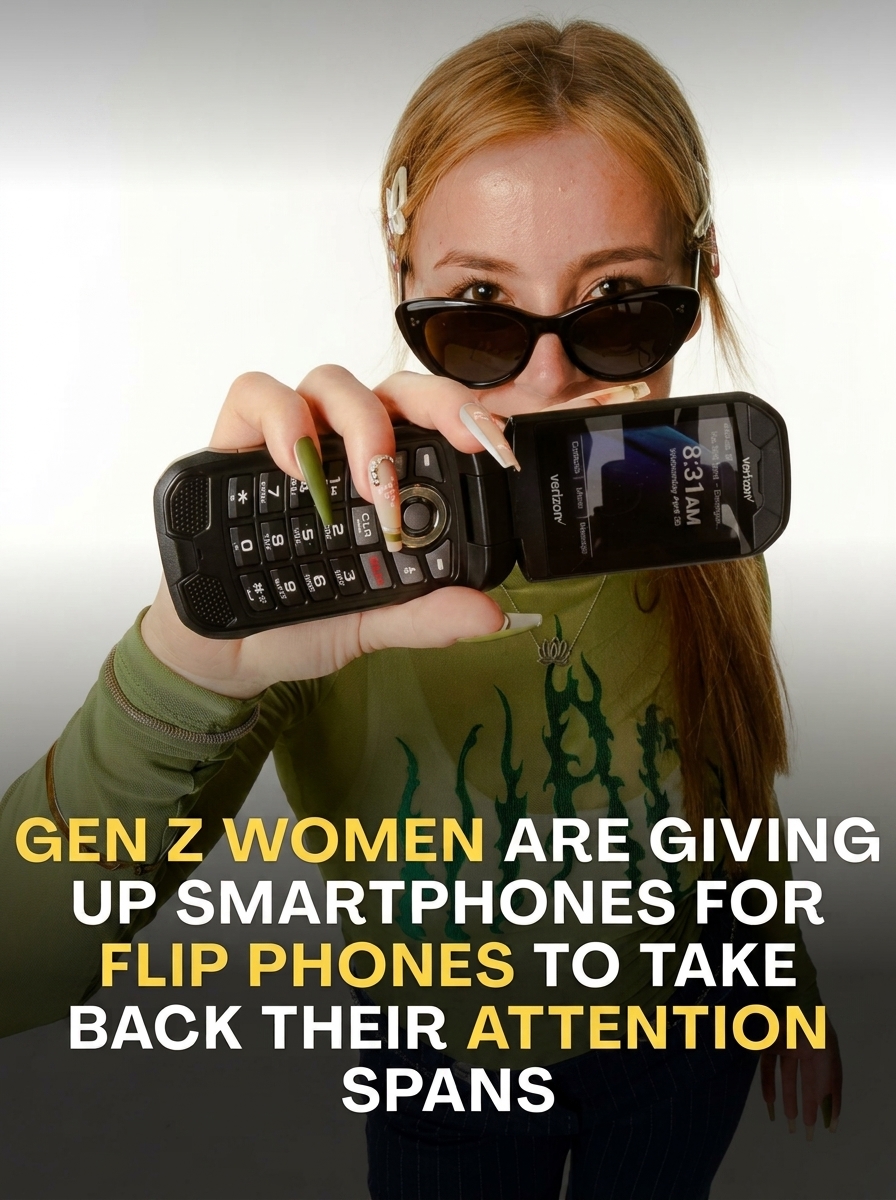
Why Some Gen Z Women Are Switching Back to Flip Phones
Smartphones were supposed to make life easier.
They gave us instant communication, maps, cameras, banking, entertainment, social media, and access to almost everything from a device that fits in a pocket.
But some young women are deliberately choosing to give many of those conveniences up.
Instead of upgrading to the newest smartphone, they're going in the opposite direction: back to simple flip phones.
Why Make the Switch?
For some people, the attraction isn't nostalgia.
It's the lack of distractions.
A basic flip phone can make calls and send texts without constantly offering social media feeds, short videos, notifications, games, and endless scrolling.
That difference can completely change how someone uses their phone.
Instead of reaching for a device whenever there's a moment of boredom, there's simply less to do on it.
Trying to Reclaim Their Attention
One of the biggest complaints about modern smartphones is how easily they can consume attention.
A person might pick up their phone to check one message and, minutes later, find themselves scrolling through videos or social media.
The problem isn't necessarily the phone itself.
It's the enormous number of attention-grabbing services built around it.
A flip phone removes much of that temptation.
For some users, that creates a clearer boundary between using a phone and being entertained by a phone.
Some Say They Feel More Present
People who make the switch often describe a surprisingly simple benefit: they spend less time looking at a screen.
That can mean:
- More uninterrupted conversations
- Fewer notifications
- Less automatic scrolling
- More attention during meals
- More time away from social media
The phone becomes a communication tool rather than an entertainment center.
What About Anxiety?
Some people also report feeling less mentally overwhelmed after reducing their smartphone use.
Constant notifications, social comparisons, news updates, and algorithmic content can create a feeling that there's always something demanding attention.
Removing those triggers may make some people feel calmer.
But it's important not to treat a flip phone as a universal solution for anxiety or mental-health problems. People's experiences vary, and the research around smartphone use is more complicated than simply saying smartphones cause anxiety.
The Biggest Problem: Modern Life Requires Smartphones
Going back to a flip phone isn't always easy.
Many everyday services now assume that you have a smartphone.
Banking apps.
Two-factor authentication.
Digital tickets.
Navigation.
Work communication.
Ride-sharing.
Group chats.
Even some businesses rely heavily on QR codes and mobile apps.
For someone who needs those services every day, completely abandoning a smartphone can create more inconvenience than benefit.