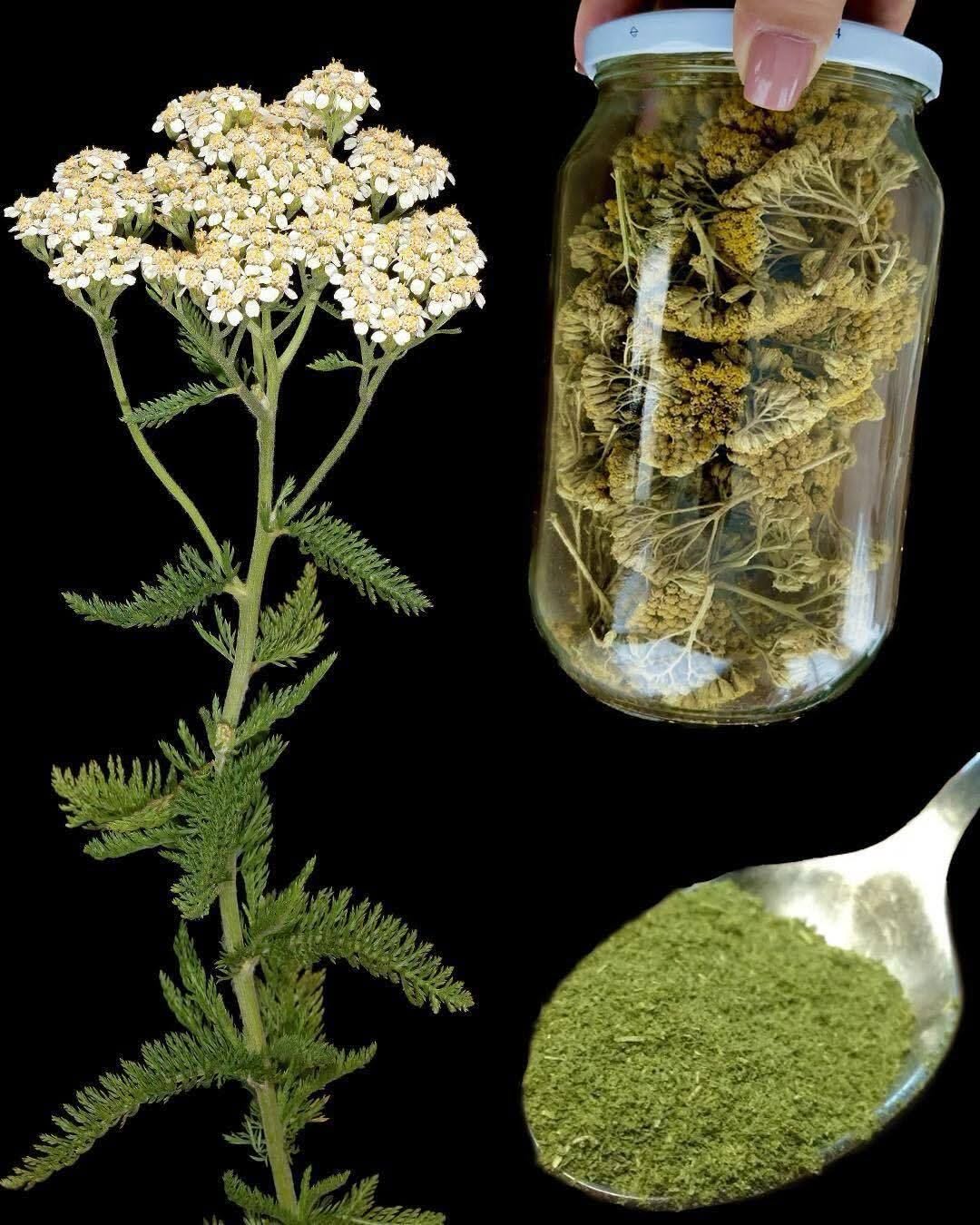
Yarrow, scientifically known as Achillea millefolium , is a perennial herb that grows in meadows, roadsides, pastures and in many gardens. It is often recognized by its small white or pale pink flower heads, finely lobed leaves and characteristic aromatic scent.
The herb has been used in European folk medicine for a long time. It is sometimes described as a plant that can solve a wide range of health problems, but such claims need to be treated with caution. Yarrow cannot cure infertility, varicose veins, infections or other diseases, and it is not intended to replace medical examination or treatment.
The European Medicines Agency (EMA) assesses certain preparations of yarrow as traditional herbal medicines for, among other things, temporary loss of appetite, mild indigestion, minor menstrual cramps and small superficial wounds. The assessment is based primarily on long-term use, not on strong clinical evidence for all the claimed effects.
How to recognize yarrow
Yarrow belongs to the Asteraceae family and can usually grow to around 20–70 centimetres tall. It often flowers from early summer until well into autumn.
Typical characteristics are:
- Small white or light pink flowers gathered in flat clusters
- Narrow, soft and very finely lobed leaves
- Upright, often slightly hairy stem
- Spicy and slightly bitter aroma
- Growing locations such as dry meadows, lawns, roadsides and pastures
The flowers can resemble some panicle plants from a distance, so you should never pick or use a wild plant that you cannot identify with certainty.
What does the current state of knowledge say about yarrow?
Yarrow contains flavonoids, bitter substances, tannins and various substances in the essential oil, among other things. However, the plant's content can vary depending on the subspecies, location, harvest time and how it has been processed.
Many possible effects have been studied in laboratories or on animals. Such research can provide clues, but it does not automatically show that the herb has the same effect in humans.
There is insufficient support for claims that yarrow would:
- Treat infertility
- Regulate hormones
- Cure irregular menstruation
- Remove varicose veins
- Treating serious infections
- Cure skin diseases
- Replacing antibiotics
- Prevent or treat cancer
- Cleanse the body of toxins
Natural substances can affect the body, but the word “natural” does not mean that a product is always safe or effective. Safety depends on factors such as dose, dosage form, duration of use, the drug, and the individual’s health.
Traditional use for indigestion
Yarrow has traditionally been used for mild ailments such as bloating, gas and temporary loss of appetite. The plant's bitter taste is believed to stimulate saliva and digestive secretions.
The EMA's conclusion applies to traditional herbal preparations and mild, transient symptoms. It does not mean that yarrow has been proven to treat stomach ulcers, inflammatory bowel disease, infections or long-term stomach problems.
Contact healthcare at:
- Recurrent or severe abdominal pain
- Blood in the stool
- Black stool
- Persistent vomiting
- Involuntary weight loss
- Difficulty swallowing
- Problems that don't go away
Such symptoms should not be treated solely with herbal teas or supplements.
Yarrow and menstrual disorders
Yarrow has long been used traditionally for mild menstrual cramps. The EMA lists minor menstrual cramps as a traditional use for some yarrow preparations.
This does not mean that the herb treats the cause of heavy or irregular bleeding. Period pain can sometimes be due to conditions such as endometriosis, fibroids, infections, or other gynecological problems.
Seek medical attention if you experience:
- Sudden, very severe menstrual pain
- Bleeding between periods
- Very heavy or prolonged bleeding
- Dizziness, weakness, or signs of anemia
- Pain along with fever
- Problems that affect school, work or everyday life
The claim that yarrow helps with infertility lacks sufficient scientific support. Anyone who is having difficulty conceiving should seek medical advice rather than relying on herbal home remedies.
Use on the skin
Some traditional yarrow preparations are used on small, superficial wounds. This use applies to minor skin injuries and not deep wounds, larger burns, or infected areas.
Do not place home-picked, unclean leaves directly on an open wound. Plant material may contain soil, bacteria, mold spores, and pesticide residues or animal contamination.
For a small wound, it is safer to:
- Wash your hands.
- Rinse the wound with clean, lukewarm water.
- Carefully remove visible dirt.
- Cover with a clean bandage if necessary.
- Keep an eye out for redness, swelling, warmth, or increasing pain.
Seek medical attention for deep wounds, heavy bleeding, bites, foreign objects in the wound, or signs of infection.
Yarrow as herbal tea
Dried yarrow is sometimes sold as an herbal tea or as an ingredient in herbal mixtures. First of all, choose a controlled product from a reputable manufacturer rather than a plant picked in an unsafe place.
Follow the dosage instructions on the packaging. Strength can vary greatly between products, and a stronger tea is not necessarily better.
Do not use yarrow tea daily for a long time without consulting a doctor or pharmacist, especially if you are taking medication or have a medical condition.
Discontinue use if you experience:
- Itching
- Rash
- Swelling
- Irritation in the mouth or throat
- Nausea
- Dizziness
- Respiratory problems
If you experience swelling in your face or throat or difficulty breathing, emergency care is needed.