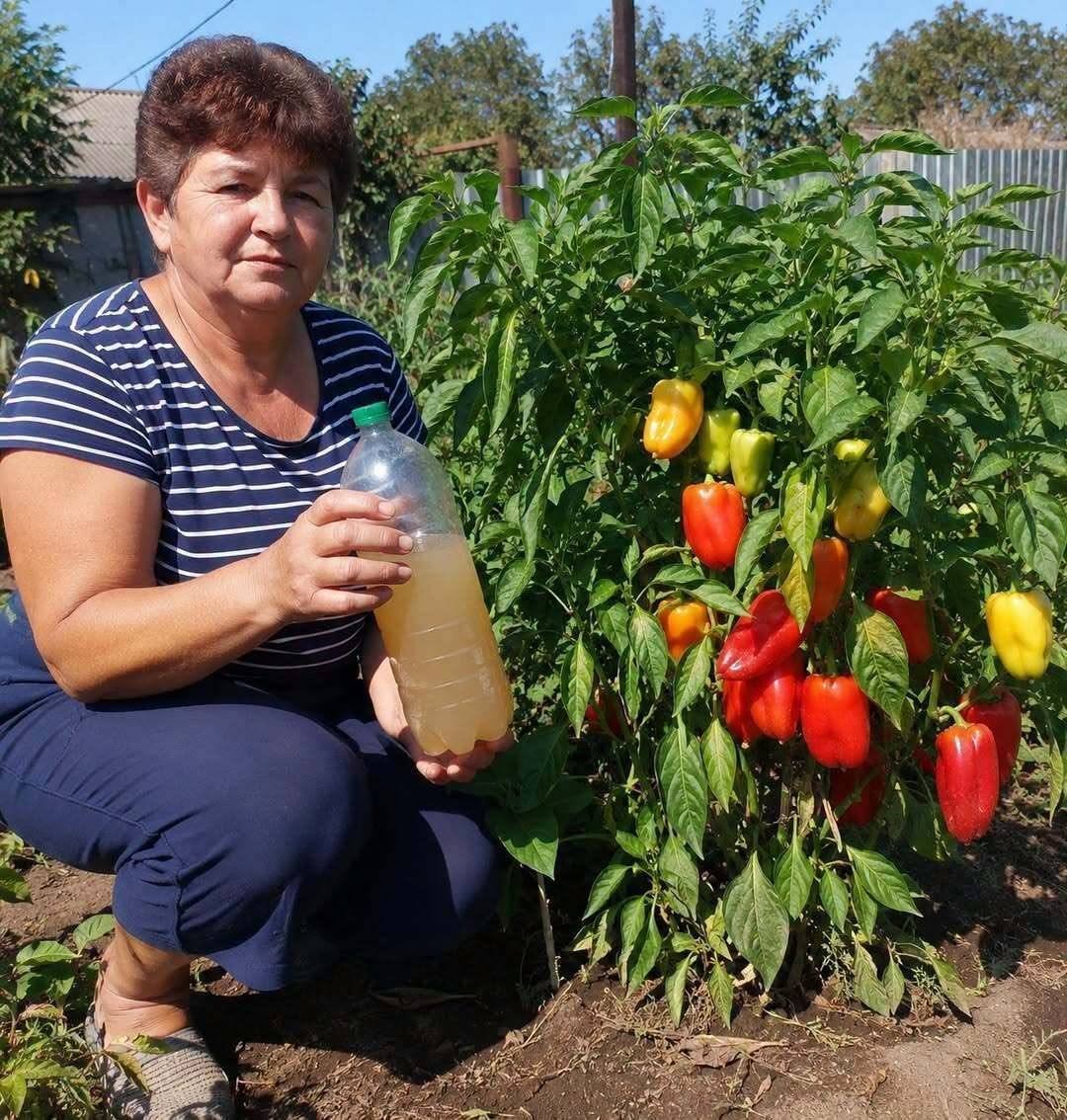
The fruits become larger, plumper, juicier and naturally sweeter, and the plants remain healthy and fruit for a significantly longer period of time.
Growing peppers requires patience, but proper care can significantly increase yield and fruit quality. The flowering period and the development of the first fruits determine whether the peppers will be large, juicy, and fleshy, or small and spindly. For this reason, experienced gardeners use a simple, natural fertilizer at this stage to provide the plants with all the necessary nutrients.
Why do peppers produce small fruit?
Many growers believe that the size and flavor of peppers depend solely on the variety. In reality, the nutrient supply to the plant during flowering and fruit development plays a much more important role.
If peppers are deficient in potassium, calcium, or boron, the plant cannot reach its full growth potential. The consequences:
Small fruits,
thin-walled peppers,
slow growth,
less sweet flavor and
fall of flowers and young fruits.
This is why it is so important to fertilize plants regularly during this period.
The best natural fertilizer? Wood ash.
The fruits become larger, plumper, juicier and naturally sweeter, and the plants remain healthy and fruit for a significantly longer period of time.
Growing peppers requires patience, but proper care can significantly increase yield and fruit quality. The flowering period and the development of the first fruits determine whether the peppers will be large, juicy, and fleshy, or small and spindly. For this reason, experienced gardeners use a simple, natural fertilizer at this stage to provide the plants with all the necessary nutrients.
To continue reading, click (NEXT) below!