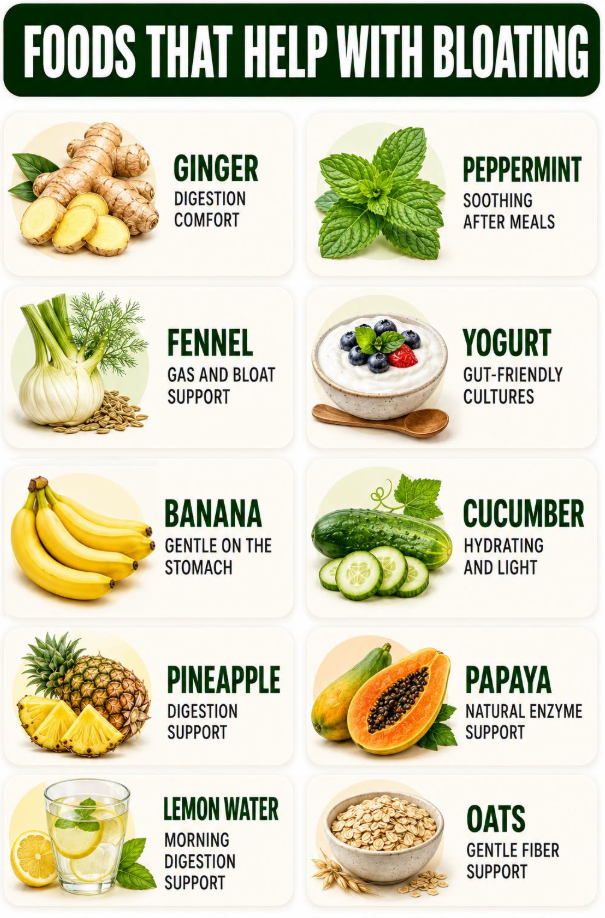
Gas and bloating can cause discomfort, stomach pain, and a feeling of fullness. Fortunately, several natural foods, herbs, and healthy habits may help improve digestion and reduce excess gas.
Common Causes of Gas and Bloating
Bloating can occur for several reasons, including:
- Eating too quickly and swallowing air.
- Consuming gas-producing foods.
- Food intolerances such as lactose intolerance.
- Irritable bowel syndrome (IBS).
- Stress and anxiety.
- Acid reflux or digestive disorders.
12 Natural Remedies That May Help
1. Chamomile Tea
Chamomile helps relax the digestive tract and may relieve:
- Gas
- Bloating
- Indigestion
- Stomach cramps
Drink 2–3 cups daily for digestive support.
2. Peppermint
Peppermint helps relax intestinal muscles and may reduce:
- Gas
- Bloating
- Stomach discomfort
- IBS symptoms
Peppermint tea or enteric-coated peppermint oil capsules are commonly used.
3. Ginger
Ginger supports digestion and may help:
- Reduce gas
- Ease bloating
- Relieve nausea
- Improve stomach emptying
Drinking ginger tea before meals may be especially beneficial.
4. Turmeric
Curcumin, the active compound in turmeric, may support digestion and help reduce:
- Gas
- Bloating
- Indigestion
- Mild digestive inflammation
Combining turmeric with ginger and a pinch of black pepper may improve absorption.
5. Probiotics
Healthy gut bacteria play an important role in digestion.
Probiotics may help:
- Reduce bloating
- Lower gas production
- Improve bowel regularity
Good sources include:
- Yogurt with live cultures
- Kefir
- Fermented foods
6. Apple Cider Vinegar
Some people find that diluted apple cider vinegar before meals helps support digestion and reduces post-meal bloating.
Mix one tablespoon with a glass of water before eating.
7. Activated Charcoal
Activated charcoal may temporarily reduce excess intestinal gas and bloating in some people by trapping gas in the digestive tract.
Use only as directed and consult a healthcare professional if taking medications.
8. Cinnamon
Cinnamon may support healthy digestion and help reduce feelings of fullness after meals.
It also contains natural antimicrobial compounds.
9. Caraway Seeds
Caraway has traditionally been used to ease:
- Flatulence
- Burping
- Bloating
- Mild stomach cramps
It can be prepared as a herbal tea.
10. Lemon Balm
Lemon balm is known for its calming and digestive properties.
It may help reduce:
- Gas
- Bloating
- Digestive discomfort
11. Cumin
Cumin supports digestion and may help reduce gas after meals.
Many people prepare cumin tea or use it regularly in cooking.
12. Try a Low-FODMAP Diet
People with IBS often benefit from limiting foods that ferment easily in the gut.
Low-FODMAP foods include:
- Rice
- Quinoa
- Sweet potatoes
- Green beans
- Zucchini
- Citrus fruits
- Kiwifruit
- Bananas
Tips to Prevent Gas and Bloating
Simple lifestyle habits can make a big difference:
- Eat slowly.
- Chew food thoroughly.
- Avoid overeating.
- Take a short walk after meals.
- Reduce very fatty meals.
- Identify and avoid foods that trigger your symptoms.
Dairy and Lactose Intolerance
If dairy products consistently cause bloating, gas, or stomach discomfort, lactose intolerance may be the cause.
Some fermented dairy products, such as yogurt and kefir, are often easier to digest than milk for many people.