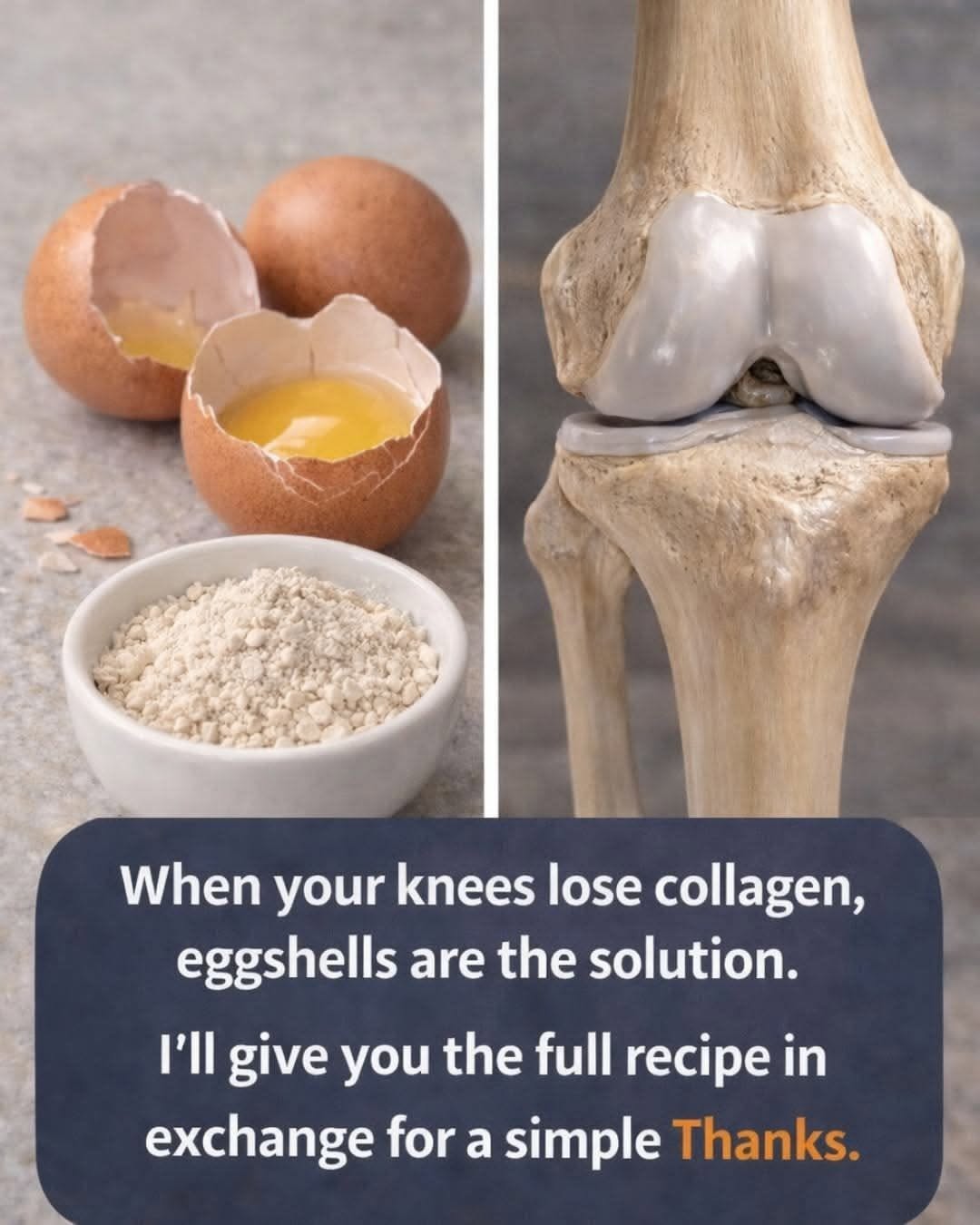
If you've spent time on social media recently, you've probably seen posts claiming that eating eggshells can restore knee collagen, eliminate joint pain, or rebuild damaged cartilage.
It sounds simple and natural—but is it true?
The answer is more complicated.
While eggshells and eggshell membranes contain nutrients that are important for the body, they are not a proven cure for joint problems or cartilage loss. Understanding the difference between eggshells and eggshell membrane is essential before trying any home remedy.
Important: This article is for educational purposes only and should not replace medical advice. If you have persistent joint pain or limited mobility, consult a healthcare professional.
Why Knee Collagen Matters
Healthy knees rely on cartilage, a smooth tissue that cushions the ends of bones and allows joints to move comfortably.
Collagen is one of the main structural proteins found in cartilage.
As we age:
- Natural collagen production gradually decreases.
- Cartilage may become thinner.
- Joint flexibility can decline.
- Stiffness and discomfort may become more common.
These changes are especially common in people with osteoarthritis.
What's Actually Inside an Eggshell?
Most of an eggshell consists of:
- Calcium carbonate (about 95%)
- Small amounts of magnesium
- Phosphorus
- Trace minerals
The shell itself contains very little collagen.
However, the thin membrane inside the shell is different.