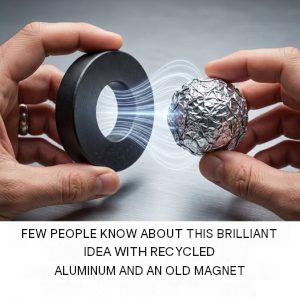
Videos promising amazing household tricks or spectacular scientific effects regularly circulate on social media. A perennial favorite on platforms like YouTube and TikTok is the supposed miracle cure for heavily rusted metal parts using a combination of a permanent magnet, aluminum foil, wire, and a salty liquid. The clips often show how heavily oxidized tools, screws, or components lose their rust and shine like new within seconds or minutes.
What content creators often present as an “industry secret” or fascinating magic is, at its core, based on real electrochemical and physical principles—especially electrolysis and galvanic cells. At the same time, many of these videos are heavily edited or misleading due to incomplete explanations. This comprehensive guide explains the actual physical and chemical processes involved in this experiment, where the magnet’s role ends, where the chemistry begins, and how rust removal in the home truly works sustainably.
What content creators often present as an “industry secret” or fascinating magic is actually based on real electrochemical and physical principles—especially electrolysis and galvanic cells. The Chemistry of Oxidation: How Rust Forms and How It Differs
To understand how rust can be removed, we must first consider its formation. Commonly known as rust, it is the corrosion product of iron or steel, formed by reaction with oxygen in the presence of water or atmospheric humidity (oxidation). Chemically, it is usually a mixture of various iron oxides and iron hydroxides, primarily iron(III) oxide-hydroxide (FeO(OH) or Fe₂O₃ ⋅ nH₂O).