When ants suddenly enter your house, here's what the universe is trying to tell you.
Many people notice the sudden appearance of ants in their homes and wonder if there's a deeper meaning behind this phenomenon. In various cultures, ants have long been associated with hard work, perseverance, preparation, and a sense of community. While folklore and Feng Shui traditions often attribute symbolic meanings to ant activity, there are also practical explanations based on weather patterns and environmental changes.
Whether you look at ants from a spiritual or scientific perspective, their behavior can sometimes provide clues about changes happening around your home and in nature.
Is it good or bad when ants enter your house?
According to some Feng Shui traditions, the presence of ants building nests inside a home can be interpreted as a sign of hidden structural deterioration. If ant colonies create extensive tunnels within walls, floors, or foundations, they can potentially contribute to structural damage over time.
From a practical standpoint, large ant colonies nesting inside a building should be inspected and managed appropriately, especially if they cause damage or create sanitation problems.
Traditional beliefs associate persistent ant infestations with imbalances in the home environment. However, these interpretations vary widely and are not scientifically proven.
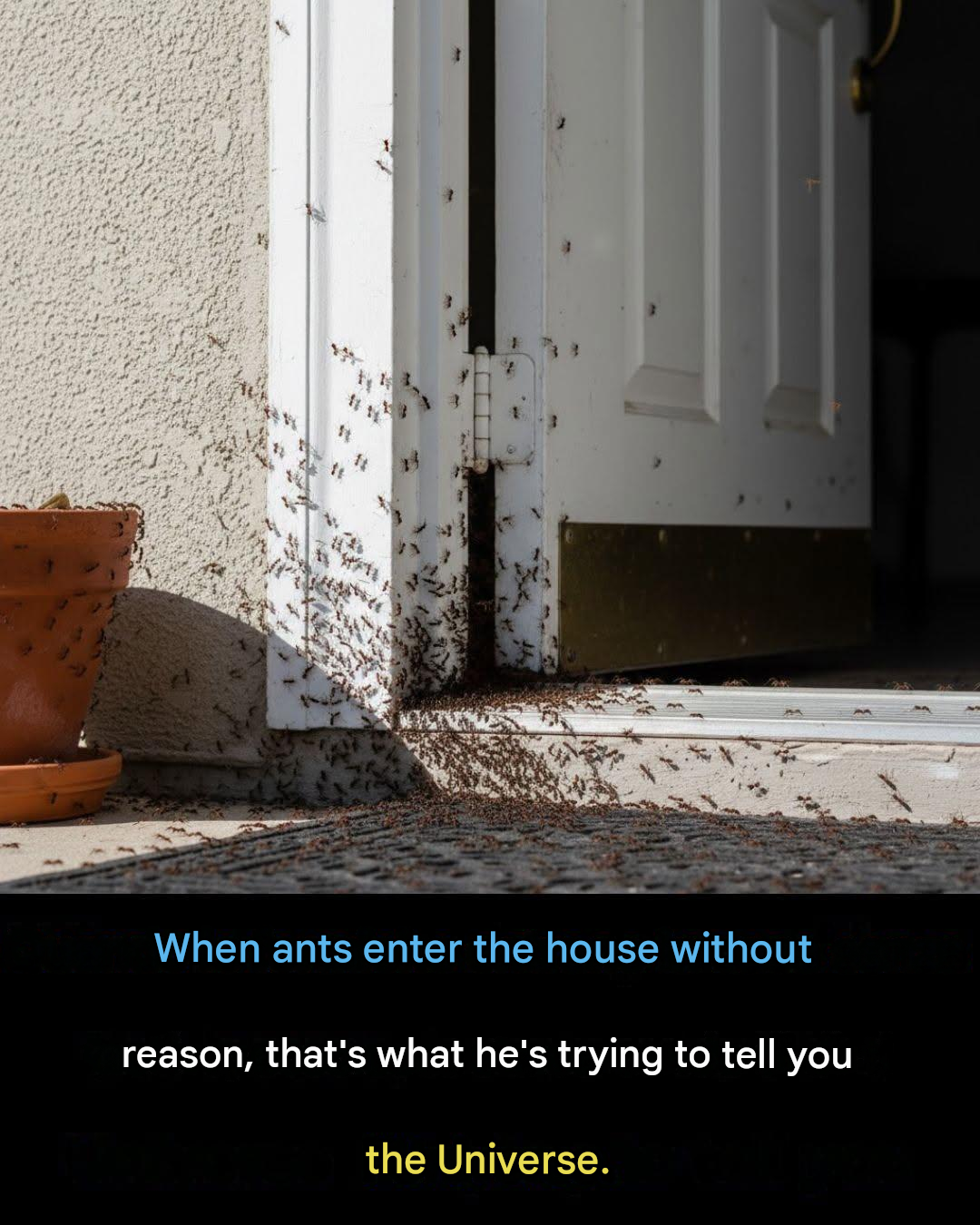
When ants enter the house
If you suddenly notice a line of ants entering your home, many believe it could be a sign of approaching rain or a storm.
Scientists have observed that ants are extremely sensitive to changes in humidity, atmospheric pressure, and temperature. Before heavy rains, ants may seek higher, drier locations to protect their colonies and food supplies from flooding.
Traditional meaning: Rain or unstable weather conditions are forecast.
Practical explanation: Ants are looking for a safer, drier shelter.
When ants move their nests higher
If you notice ants carrying eggs, larvae, or food to higher places such as tree trunks, walls, or elevated ground, this behavior is often associated with prolonged periods of rain.
By moving upward, ant colonies may be trying to avoid water accumulation and protect the queen and developing larvae.
Traditional meaning: Prolonged rain or possible flooding is forecast.
Practical explanation: Ants react to environmental conditions that indicate increased humidity.
How ants prepare for climate change becomes even more fascinating when you look at how they modify their nests before a storm arrives.